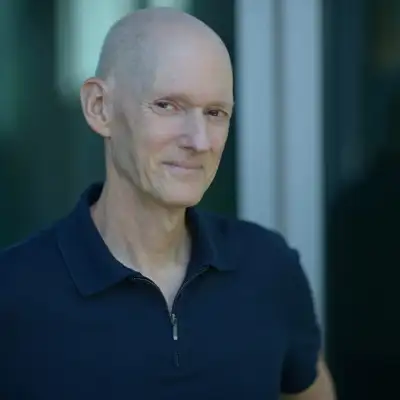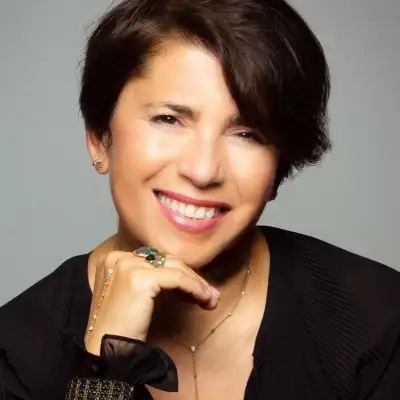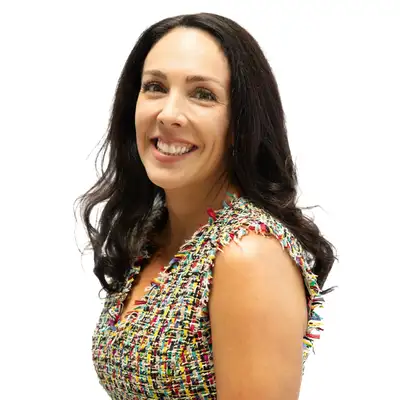
Kelly O’Connell and Fernanda Carapinha: Building Infrastructure for Founder Success
HOST
Welcome to The Impact Pitch, the podcast where I connect startups, funders, and incubators building social impact companies that thrive.
I’m Lee Schneider.
My first guest today is Fernanda Carapinha, founder and CEO of WE Intelligence and creator of Founderverse®.
Fernanda believes that the 90% startup failure rate is not evidence that most entrepreneurs can’t succeed. Rather, it’s evidence that most founders are building without the intelligence, systems, and infrastructure needed to scale effectively.
Drawing from a unique background spanning psychology, behavioral intelligence, AI, and more than fifteen years as a senior executive in Hollywood, she is building technology designed to improve decision-making, execution, and outcomes for founders and the capital allocators who support them.
After I speak with Fernanda, my VC interview today is with Kelly O’Connell, managing partner of the 360 Venture Collective. 360 Venture Collective is a venture capital firm that doesn’t chase unicorns. They’re looking for founders who are committed to solving meaningful problems.
Let’s get started with my interview with Fernanda.
BEGIN FERNANDA CARAPINHA INTERVIEW
Lee Schneider: [00:00:00] Fernanda, thanks so much for joining me today on the podcast.
Fernanda Carapinha: My pleasure. It’s wonderful to be here, Lee. Thank you.
Lee Schneider: Well, you have a pretty fascinating background. Behavioral science, AI, entertainment. How does all that come together to lead you to founding this company?
Fernanda Carapinha: Well, it’s interesting because initially, if you had asked me many years ago, I didn’t necessarily see how it would all weave together to, um, provide a really rich foundation for the work that we’re doing right now. But it’s actually perfect. So the way that it weaves together is I- I’ve been in the behavioral space and in the talent space for…
and innovation space for a long time. The innovation space, as you know, I started in the entertainment business. I was head of creative development. So I have spent many years looking for and [00:01:00] identifying great IP, great talent to build and scale from scratch, and I always felt that founders are very much like, like actors and producers, writers, directors.
There’s a lot of, you know, kind of diamond in the rough. With the proper support, you know, these people can really grow into major powerhouses. So that’s always been my point of view. I never look at a founder as, oh, she or he is great or they’re not great. It- it’s all potential that really perhaps hasn’t really taken full bloom quite yet.
So that was kind of my talent side. I have a degree, as you know, in clinical psych, so I’ve done a lot of behavioral work and have a lot of experience in kind of systems psychology, and I’m a real systems thinker. And then I created an AI ML company over 15 years ago where we were doing bot detection in social media, so profiling human behavior versus machine behavior, which is very appropriate for what’s going on now with AI.
So th- [00:02:00] these things have all converged in my passion to create infrastructure that can really drive intelligent business building and also business allocation of capital and/or resources. Uh, because one of the things that I felt when I came into this particular company is that the lack of infrastructure was really the core cause for the tremendous failure rate that exists.
Lee Schneider: Now, when you say infrastructure, I assume you don’t mean physical, so how should we take that meaning of infrastructure? What do you mean by that?
Fernanda Carapinha: I think probably an easier way to think about it would be a series of interrelated systems that are intelligent and speak to each other and are kind of designed so that the output of one feeds into the second system and the third and the fourth, uh, where what you’re doing is you’re really looking at the workflow, and I use that term ver- [00:03:00] at a very big scale, ’cause we’re talking about business building, not necessarily like I need to send out an email.
Um, you’re looking at the workflow of what it takes to actually build a business. So on some levels it’s almost like a manufacturing floor where you’re building different stations but through software where people naturally would do A, B, C, or D in order to build a business. Our company is divided into assessment, mitigation, and top-line growth.
So that would be like three sections of the factory floor. And so we do heavy diagnostics upfront to really understand the founder and the founding teams, to understand what they are super strong in and what areas they need support in before we move on to mitigation.
Lee Schneider: If I’m a user of the platform, do I consider this an everyday partner? Is it, uh, a… Yeah, right, it’s a, not a person, but a member of my team that I’m going to [00:04:00] access all the time?
Fernanda Carapinha: Yeah. Yeah, for sure. You could also kind of use the medical model, where you go in first, you take a bunch of tests, and then your doctor prescribes things that will help you get healthier, and then you get healthier, which would be the top-line growth, and he or she helps you kind of stay in good health.
That’s a dynamic system. It’s not like you do it once and you’re good and done, right? You just repeatedly continue to build on that. So we want people to use the system to help in the evolution and the scaling of their business. We crafted the Founderverse as when we go to market with this version of the platform to be very focused on the $0 in revenue to kind of 5 million in revenue, which we consider the valley of death, right?
And we feel very good about if we can turn the Titanic in terms of the failure rate within that sector, the rest gets much easier, and then we can do different iterations and different levels of the Founderverse [00:05:00] for companies that are, like, in series A and beyond.
Lee Schneider: Now, in our timeframe now, there’s a lot of people thinking about this. But as recently as maybe six months ago or 10 months ago, not a lot of people were thinking about this in this way, in these kinds of agentic connected intelligences. So I’m curious to know, how did you pitch it? When this was kind of a new frontier, how did you say what it was?
Fernanda Carapinha: When we originally launched the company, which was over five years ago, uh, what it looked like was very different than what it is today. What we have today is always my ultimate goal, but we needed to start small. And by that, I mean, given the resources and where we were as a young company, we wanted to learn and glean a lot from the marketplace.
So we initially pitched it as a digital do-it-yourself platform for business building, and we were supporting at the [00:06:00] time female founders who were developing mostly, um, tech-oriented companies. And it was a hybrid offering where there was the technology piece, the platform piece, and then there was the in-person piece where we would have, you know, coffees, events, we would do mentorship sessions, et cetera.
And that was launched during COVID, and at that time, you know, no one was really doing that. But post-COVID everybody went online for… obviously for business reasons. Um, so it’s been a journey, and the beauty of the way I pitch it now, which is decision and execution infrastructure powered by behavioral science, is finally coming, I think, home to roost because the, um, the culture and the times and the technology are here.
Whereas I have this habit of sometimes being ahead of the curve, too much ahead of the curve, and then people kind of scratch their heads and don’t really quite [00:07:00] understand what you mean. And our approach, I think, is very unique and different in that, given my own background and my team’s background in behavioral science, um, we are really focused…
The entry point for us is all about the jockey, not about the horse, and the entire industry has always been focused on the horse, and the horse being the company. And if you’re in the emerging business sector and you ask any investor, you know, “What’s the one key thing?” they will typically say the founder, because a lot will change in those early days.
So it’s all about, you know, who’s driving the company. So therefore, that is our entry point. So when we do assessment, we’re not assessing whether it’s a great idea or whether you went to Harvard or what your background is. We’re really doing simulation testing and assessing how those founders and collectively the team, how they think and operate.
Lee Schneider: When you think back to the many times you’ve spoken about this and the many times you’ve pitched it probably to VCs and other [00:08:00] investors, what comes to mind as your biggest lessons learned? How did you adapt, and what do you take away from that experience?
Fernanda Carapinha: Just a sidebar note. So I was a Hollywood studio executive, so I used to be on the other side where people come in and pitch you ideas. And although the industries are very different, in actuality, when you strip it all down, they’re very similar. And so when you go pitch a studio executive, you need to know Bob is like X, he likes X, so I need to kind of craft my pitch slightly differently for Bob than I do for Susan, right?
And I feel that that’s kind of the challenge and the burden that most founders feel, where you are constantly trying to assess, should I pitch the entire enchilada? Do I just pitch a piece of it? You know, is this person very risk-averse, so I have to really be very focused because they’ll think I’m being too big?
Other people are very bold. Other people want the impact story. Other people just want the monetary [00:09:00] story. So it’s, you know, it’s a major challenge for, you know, folks on the selling side, the founders, to really understand how to navigate the conversation so that you adequately can present the potential and the upside, the why, all of that.
I mean, it’s not easy. I think over time you get better at it, and we’re actually developing tools to help founders achieve that. We created something called the Allocator Code, which is a psychological profile that you can run on any investor that you’re going to talk to, and it doesn’t just give you kind of their thesis.
More importantly, it puts them on a risk appetite scale. So you know if you don’t have a lot of traction, let’s say, but you have a big vision and it’s all about impact, is this person really gonna care, you know? And how should you actually present yourself and what you’re doing? So it’s a big public search engine that we’ve built.
Lee Schneider: It makes me think that one of the most important things that a founder [00:10:00] needs to do in a pitch is commit. Commit to the pitch. And you’re helping, not failure-proof, but de-risk it a bit, because there’s always the risk that you go in there and you get it wrong and you commit fully and they say, “No, that’s not right.”
And you say, “But I have another one. Let me try it this way.” You know, which of course never, ever works. So it’s interesting to me to hear the way you’re allowing us to see a really big picture view and a real psychological profile of the people that we go in who are our audience in these things.
Fernanda Carapinha: Yeah, and we do the same thing for the allocators. So allocators who are clients can use our assessment engine to get a really clear view of the strengths and the gaps of a particular founder and founding team, and they can use that as part of their data inputs when they’re deciding, do I take a meeting?
Do I take a call? Do I review a deck? Do I write a check? [00:11:00] Do I even go into due diligence? Um, because we really feel that you need to serve the entire, um, ecosystem in order to really address the 90% failure rate. So if we can help allocators make better investments, they make more money, it goes back into the ecosystem.
So it’s a win-win for everybody.
BRIDGE
HOST
Fernanda’s company was backed by the 360 Venture Collective. When I interviewed Kelly O’Connell, the managing partner, she said that the 360 Venture Collective was not working to predict the next unicorn. The fund, she said, was looking for founders who understand a problem deeply enough to build durable solutions, founders who commit to solving a problem. I wanted to know how those ideas resonated with Fernanda.
Lee Schneider: When I spoke with Kelly, she mentioned that 360 Ventures was not working to predict the next unicorn. She said something like, “360 Ventures is looking for founders who understand a problem deeply enough to build durable solutions.”
Fernanda Carapinha: Well, it really resonates very deeply for us. We’re a public benefit corporation and have been from day one. We’re also B Lab-certified. We’ve been committed to really supporting underserved founders, and of course, now we support all founders. But for me, the goal has always been how do we crack the 90% [00:12:00] failure rate?
And if we do, then that means a lot more upside for everybody. And it also means that we can de-risk the innovation and business building process more, and de-risk early stage investing, which is again a win-win for economic development all over the world. So I’m committed to that because I’m very, very passionate about problem-solving at the core level.
Like, I like to be down on the bottom floor, like in the basement. I don’t like to deal with some of the surface pain points, um, because I wanna feel like I’ve really turned the dial and made a difference before I leave this planet. I think what she’s doing is really smart because a byproduct of investing in founders like that is that she will get unicorns.
Lee Schneider: Exactly, right. She pointed out another very interesting aspect of this, which is founders tend to emphasize features. They [00:13:00] think too much maybe like a product, less like a process. She talked about it’s better to do the pitch with how you’re gonna engage in the world, not just as kind of a static, “Well, this is this item, this product.”
Lee Schneider
Do you think that founders have a tendency to overemphasize features, thinking of their companies too much like products and less like vehicles for a process?
Fernanda Carapinha:
I think it is a tendency, and I think it’s, again, because founders are so passionate about what they’re building. They’re afraid to, like, leave out, like, that one special thing that they invented or did or thought of that they think is of value to the investor, and they lose sight… We all do, myself included.
You lose sight of the person on the other side of the call who’s thinking different [00:14:00] things, quite frankly. What Kelly’s thinking about is very different than what someone else might be thinking about. But they’re all thinking at a higher level, which is, you know, how does this play? Does this have legs?
Is there a huge need for this? Are they solving a big problem? Am I gonna make my money back and 10X or 20X my money? And when you spend your precious time talking about, like, the features, then you lose people, ’cause they’re not as interested. So, given my background, uh, as a storyteller, you really have to build a story and you have to take people on that story and get them vested early on. And if you get too into the weeds, the story gets boring.
Lee Schneider: Yeah, clearly. Another aspect of this is a kind of a big picture approach where impact and business performance are not considered two separate things. If a project has impact value, it’s probably also gonna have [00:15:00] business performance, and I’ve heard that really threaded throughout everything that you’ve said today.
There’s a blend really in thinking about this in more of a global way. Was that an adjustment for you? Or it kinda sounds like you already have had that point of view and that’s how you’ve been doing this all along.
Fernanda Carapinha: Yeah, no, that’s where I live and breathe, and that’s the only thing that I really care about. Obviously, everybody wants to be successful, make money, have an exit or go public, but on that journey you want to feel like you’ve touched millions of people and you’ve made a difference and you’ve solved a significant problem that’s made life easier for fill in the blank.
So that’s always been my passion, for sure. And I’m glad to see that more people, I think because the data reflects it, understand and appreciate that impact isn’t a nice-to-have. Impact is smart business, [00:16:00] period.
Lee Schneider: Is there anything that I forgot to ask, that we should cover?
Fernanda Carapinha: I think that there’s a tremendous opportunity for, um, founders, or for builders as the world transforms into a world filled with entrepreneurs, um, for companies like ours who are really supporting that great idea engine to do more to really drive smarter and more pain-free innovation processes, which includes infusing it with capital, putting the coal in the engines, because now with the advent of AI and agentic engineering, which, uh, we’re an AI-native company, more and more people are all turning to entrepreneurship. It doesn’t matter if you’re a C-suite executive or not, you have, you know, the doctor, the dentist, the lawyer, the CEO, all building because they [00:17:00] can now.
And we actually also as part of our platform have built a separate application to serve builders globally in helping them to take an idea in their head and get it into shape so that it is rich enough and contextually accurate enough that you can feed it to an LLM or feed it to an engineer, and they understand exactly what it is you want to build, and it’s drafted in engineering speak as opposed to founder speak, because a lot is lost in translation.
And so because we’re very excited, I… We believe that this application alone can be to, um, builders what YouTube was to creators, because everyone became a creator once you had not only the iPhone, but a platform like YouTube.
Lee Schneider: It’s good to be ahead of the curve, isn’t it?
Fernanda Carapinha: Yes, it is.
Lee Schneider: Thanks so much for coming on the show today. I really appreciate it.
Fernanda Carapinha: Yeah, no, thank you. Thank you very much. Appreciate [00:18:00] it.
HOST
Kelly O’Connell is the managing partner at the 360 Venture Collective. I asked her to tell me why she chose to allocate funds to Fernanda’s company. Kelly’s first response took a broad perspective to discuss why she funds founders.
* Kelly O'Conell**The team that we've chosen today, uh, is a team that is one of our most recent investment commitments and, uh, really exemplifies the next chapter for 360 Venture Collective, which is helping to solve the founder fragmentation, uh, problem [00:01:00] and longevity and support problem for founder leadership, or what we call the activated leadership model.
And so, today the founder that we’re excited to introduce is Fernanda Carapinha, the founder of WeGlobal Studios and Founderverse. Uh, and she’s just an exceptional human being.
Lee Schneider: Delve into a little bit for me why you chose to make them part of the 360 Venture Collective.
Kelly O’Connell: What drew us to Fernanda is not simply her mission. Admittedly, we see a lot of really talented mission-driven founders. What stood out is just the rare combination of domain expertise, founder resilience, and clear customer problem understanding. So she very uniquely understands and is laser-focused on the audience [00:02:00] served, and multiple pathways to value creation, which is a really important concept for us at 360.
We really look for opportunities where thoughtful, disciplined capital can create more than one win, and we call it the win-win-win approach. And this is about: can the company solve a real problem? Can it create utility for customers? Can it strengthen the ecosystem? Can it potentially generate meaningful upside for our investors, those limited partners?
And Fernanda’s work is just an excellent example of, we believe, a company that has tremendous potential to do that.
Lee Schneider: Now you’ve outlined a couple of data points, bullet points, that basically are what you’re looking for. Is that set? Do you have to change it? Does a founder come along who blows up the paradigm, or do you basically have the boxes to check and you’re looking for them to meet that?
Kelly O’Connell: I think we [00:03:00] have always taken a different approach when it comes to investing. We’ve historically set up a process where we have an unconscious-bias-avoiding model for applications.
So we accept and require all founders to go through the same application process. We have a proprietary weighting and scoring model that’s thesis-aligned.
We, however, know that in a changing ecosystem, it is also our responsibility as fiduciary stewards to be aware of the need to change and support thesis-adjacent or, uh, high-potential founder opportunities as the market starts to turn. And I think that we talk a lot today about the next chapter of 360 Venture Collective.
Yesterday was actually our anniversary of our initial fund close, which was incredible. And the change from a thesis specific to industry [00:04:00] to a real focus on pathways to liquidity is a great example of how we approach change systematically and data-driven.
Lee Schneider: What does that mean? If I try to explain it to someone, what would I say?
Kelly O’Connell: That’s a great question. Venture’s often described as trying to predict the next unicorn, and that’s not really how we think at 360. Instead, we look for founders who understand a problem deeply enough to build durable solutions and to create optionality. So we’re looking for: is this person committed to solving a problem?
Do they deeply understand the customers being served? Do they uniquely have the potential ahead of the market curve to capture that market? And then are they willing to change as markets change, as technology adoptions change, as capital changes? And do they have the flexibility enough to be able to adjust with that to be able to [00:05:00] find a profitable outcome for their business?
Can they build a sustainable business? And then reinvesting in the ones that have the highest potential to become those unicorns. We’re not foregoing the potentiality of outsized returns. But instead, we’re saying there are many ways to be successful as business entrepreneurs, and we want to back that success with disciplined capital and a supportive ecosystem.
Lee Schneider: Now we’re talking here in kind of a roundabout way about the personality of the founder. There’s a certain kind of person who can do this well. Yes, they have to be smart. Yes, they have to be resilient. Yes, they have to have a bit of a crystal ball, look into the future. But there’s probably some qualities that you’ve seen.
You’ve probably been involved in how many thousands of pitches. There’s probably some qualities you’ve encountered, personal qualities. I’m curious what those might be. [00:06:00]
Kelly O’Connell: Now I’m gonna speak specifically about Fernanda for just a second because I think that that’s one of the things that exemplifies her as a thesis-aligned potential founder. And it’s that she spent years developing expertise in her space, and she brings a curiosity and willingness to learn as her space is adapting.
And that combination of deep understanding of customer served, curiosity and capacity to learn and evolve, and a commitment to solving an addressable, fundamental, market-relevant problem.
Lee Schneider: Hmm.
Kelly O’Connell: uh, is really, really important. And that’s what excites me, not just about what the company is today, but about the number of pathways the platform and relationships can change to potentially scale to shift the ecosystem to solve the [00:07:00] problem.
And the team that she’s able to attract to be able to support those objectives is grounded in that philosophy as well, and the philosophy of understanding with great self-awareness her own gaps and strengths, to be able to bring in the right team, both advisory and internal, to shore that up.
Lee Schneider: That’s fascinating because the words we usually hear associated with founders are grit, determination, ability to pivot maybe. But I heard curiosity and I heard self-awareness. And I would think that those two ideas are rare, but correct me if I’m wrong. And those two concepts might help with team building and connection, because if the boss is curious and self-aware, I think that would attract a certain kind of other human to the company.
But what do you think about all that?
Kelly O’Connell: I [00:08:00] love this point, Lee. I think, as somebody who considers herself, and one of my greatest strengths, resilience and grit, I value it. And usually when I answer the question, and perhaps in past podcasts people would hear it, what do you look for in a founder? I have a very rote answer, and that answer is, would I work for them?
Would I want to be led by them? And that was always my response to, what are you looking for? Can I answer honestly that this is a person I would work for? But as I think about the time we’re in, both through the ecosystem shift, the technological shift, the social-cultural shifts that we’re experiencing globally, I pushed myself to think beyond that for our firm,
and to think beyond why would I work for somebody? What comes behind that? And adaptability, curiosity, [00:09:00] capacity to learn, commitment to an ideological belief with a willingness to be flexible are attributes I see as necessary for leaders that can be activated timely and scale with capital efficiency, which I think is essential, particularly for the types of investments we’re making.
Early stage in a shifting market, we need leaders who bring that kind of flex. Now, the other thing I’ll say is that every founder, regardless of their skill sets, what their unique approaches are, they’re all gonna face capital constraints, market shifts, product challenges, team challenges. So resilience and grit, those attributes don’t go away.
Those are necessary within the organization. But we are thinking about mindfulness, we’re thinking about [00:10:00] the emotional and social skills necessary to lead future-forward companies. And I think that we believe we’re making a winning bet by shifting around that ideology.
Lee Schneider: Hmm, that’s fascinating. And when people first come into the room, so to speak, they have a brand new pitch. They’ve already gone through a process. There’s a vetting process. You know about the company. But given all the pitches you’ve heard, are there one or two things that you wish you could change about almost every pitch that comes in the door, given the vetting process and given the process?
What do you most often want to change first?
Kelly O’Connell: I will say that although our application process is very structured, as a believer in education and opportunity and access in the [00:11:00] ecosystem, I have the opportunity to partner a lot with first-time pitches, where I am coming in as a pitch judge having never heard or had context for the company before.
And I would say there are three things that I hear across pitches and across stages that I would encourage founders to shift. One, an overemphasis on product features—that is, time spent talking on what they’ve built, time talking about why it matters, the technological focus of what they’ve built. I don’t wanna fund features.
Investors typically don’t wanna fund features. Investors are thinking about funding outcomes. So I wanna see those founders, given a three-minute or five-minute pitch, describing the product and customer transformation. How does it shift how whoever they’re serving in the world engages in the world? How do they see it [00:12:00] being adopted?
What is that pathway from unknown to championed in the marketplace? And why is it relevant? If they can answer that cleanly and clearly in a pitch while also spending time on the following two things: the ask. So often, I would say about 30% of the time, founders don’t get to the ask. Tell me what you’re asking for and what milestones it will allow you to achieve.
So tell me, when we’re investing capital, how that capital ties into your vision for customer transformation and the milestone achievement necessary to get there. And those would be the three changes I’d love to see.
Lee Schneider: It really makes me think of the longevity of the idea. When you just go with features, you know, those could change.
They probably will change. It’s just a build, it’s software or whatever it is. But when you’re talking about this human element, [00:13:00] is there a framework that you bring to that? Meaning, some people will say, “Oh, there has to be a story told,” or, “There has to be a beginning, middle, and end to the way the pitch is put together.”
Now, I’m getting into kind of the analysis of why it works, why it doesn’t, what did you respond to, what you didn’t. But how does that work? You know, what is the package that comes in, so to speak?
Kelly O’Connell: I think that there are so many pitch coaches who have taught people to follow a universal playbook, and I think that that can really work for a subset of founders. But I think that I look at the many potential successful entrepreneurs who approach the work differently that that won’t work for, and those…
These are the ones I’m speaking to right now. The ones that are maybe not a graduate of an Ivy coming into the launch of a startup following the successful exit from another [00:14:00] startup, but the outsiders who are solving this. And I would say reject the kind of formulaic one, two, three, four, five.
Describe the market, describe the problem, talk about your context to the problem, and close up with the pitch. Instead, I say answer the potential objections that the investor on the other side of the ask is thinking, instead of listening to you, and that’s a really important concept. So I’m asking entrepreneurs to be self-reflective enough to acknowledge the invisible hurdles that will prevent them from getting funding.
I’m not asking them to be burdened by it. I’m asking them within their pitch to address those things, to demonstrate their leadership capacity by saying, “I’m aware of your typical investments and how I’m different. Here’s why I’m [00:15:00] relevant. Here’s why I believe this is something that needs to be part of your portfolio, and here’s why I’m solving this problem.”
So always staying connected to the three elements that have to be in the pitch. The elements have to be: what problem is being solved, how is it market-relevant, and then where does the money get me towards milestone objectives? Those all have to be there at some point. But at the beginning, I would really stop spending so much time talking about the current market problem.
I think about 30%, you know, I talked about 30% before. I would say about 15% of time spent is on problem in pitches. And the faster we’re able to build solutions, the less relevant it will be for investors about what’s happening in the ecosystem right now and the problem that’s being solved, and I just really encourage founders across the board to consider that.
Lee Schneider: That’s [00:16:00] amazing. That’s a wonderful way to end this, I think. It’s kind of taking the long view and the big picture. Is there anything you’d like to leave our listeners with today that’s kind of top of mind that we should be walking away from today with this conversation?
Kelly O’Connell: I would say, around the concept of impact in particular—this is The Impact Pitch Podcast—one common mistake is treating impact and business performance as two separate conversations. The strongest companies integrate them, and I really encourage founders, regardless of the type of company that they’re building, to think about impact as a sustainable business model, to think about the businesses that are creating meaningful outcomes as being able to be more market-resilient, to be able to create customer loyalty, stronger networks, stronger team and job [00:17:00] performance as they’re scaling through the challenging times.
So rather than thinking about your business measurements here and your impact measurements here as separate work streams, I would really encourage you to think about the entanglement of impact and sustainability, and then believe in yourself, your connection to the problem, and listen to your customers.
Lee Schneider: Awesome. Thanks so much for being on the show today.
Kelly O’Connell: Thanks so much, Lee. I appreciate the opportunity.
LESSONS LEARNED
Lee Schneider: What are the lessons learned from today’s episode? Here are four points that made the biggest impression on me from these two conversations.
The Jockey Matters More Than the Horse
The most important factor in early-stage success isn’t the idea itself—it’s the founder’s ability to think, adapt, and execute. By focusing on behavioral assessment and founder potential rather than pedigree or past achievements, both Fernanda and Kelly recognize that a determined founder with the right support can pivot and build something remarkable. This is why Fernanda built simulation testing into her platform: to assess how founders actually think and operate under pressure.
Infrastructure and Support Systems De-Risk Innovation
Fernanda’s three-phase model (assessment, mitigation, and top-line growth) mirrors how successful systems work: you diagnose, prescribe, and support ongoing health. When founders have access to tools, psychological insights, and expert networks, their innovation ecosystem becomes more effective.
Impact Startups Create Durable Value
Founders who are genuinely committed to solving a real problem build companies with more value, because their focus on impact is aligned with their focus on building value for investors.
The Story Is More Important Than the Features
Founders often get caught in the weeds, trying to explain features. But what investors want is to understand their vision and the process of change their work and company brings into the world.
Closing
That’s it for today for The Impact Pitch. If you’d like more people to discover the podcast, go to Apple Podcasts or Spotify and give The Impact Pitch five stars and a glowing review. Also, I have a mailing list. Go to impact.redcupagency.com.
Thanks for listening and watching. I’m Lee Schneider.