La Keisha Landrum Pierre: What Does it Take to Pitch an Impact Startup?
**This is a machine-generated transcript. There can be errors. The podcast recording is the definitive record of the episode.**
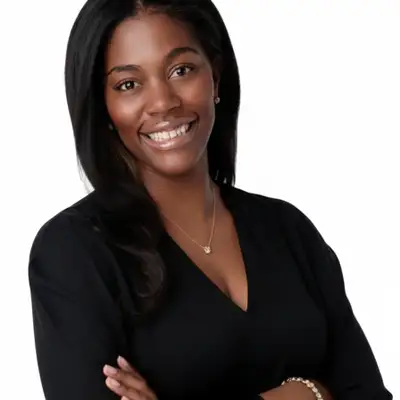
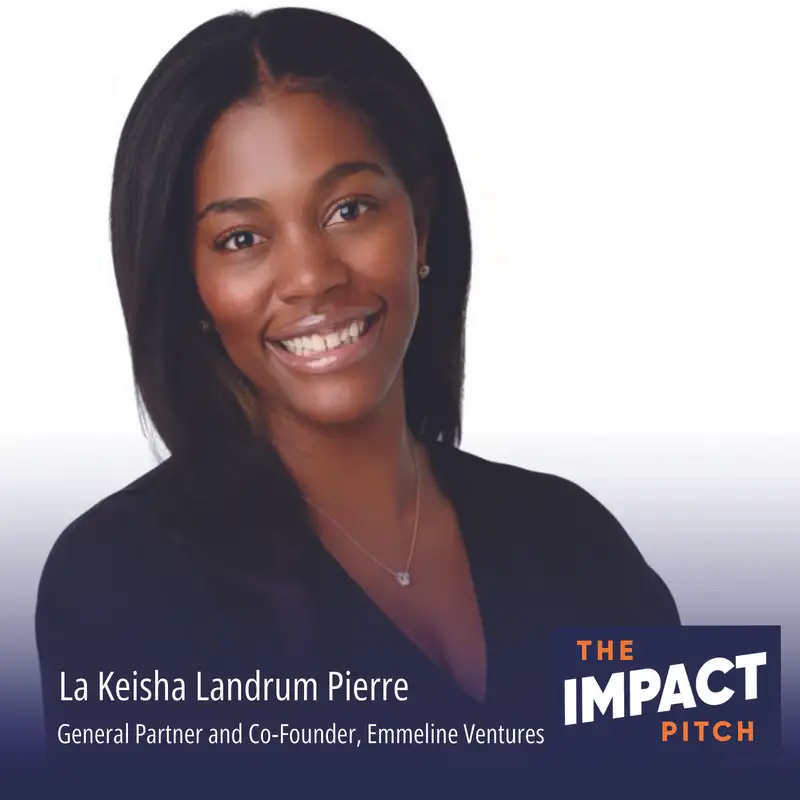
Welcome to The Impact Pitch, the podcast where I connect startups, funders, and incubators building social impact companies that thrive. I'm Lee Schneider. My guest today is La Keisha Landrum Pierre, general partner and co-founder of Emmeline Ventures, an investment firm backing women-led businesses that drive innovation in women's health, wealth, and well-being.
VCs are on the hunt for exceptional rule-breaking companies run by innovators who see the future and know how to build a pathway there. La Keisha brings a special talent to that hunt. She thrives on infusing operational excellence into impact-focused companies. She has spent the last 12 years building ops teams across the globe. Here's my interview with La Keisha Landrum Pierre.
Lee Schneider: Thanks so much for being on the show, La Keisha. My first question is: what is the first thing about a pitch that gets your attention?
La Keisha Landrum Pierre: Let's talk about what attracts me to a pitch, Lee. We can talk about what attracts any VC to a pitch, and it's storytelling. Storytelling, storytelling, storytelling.
And what that means to our firm—and I think what that means to any VC, Lee—is you take the complex things in your mind about the problem you're solving that make all of the sense in the world to you, and you're able to then tell a story that conveys more than one thing. It conveys that you understand the problem better than anyone else, but also that you're the best person to solve that problem. And not only are you the best person to solve that problem, you've got the best solution to solve it.
And you have to be able to tell that, Lee—quickly, directly, succinctly, in an inspiring fashion. As much as I wish that weren't the case, it is, Lee. I think as much as I wish it were not the case, you do want any investor to hear what you're saying, walk away inspired. If you haven't inspired them, you haven't left an imprint.
And for someone like myself that sees over a thousand pitches, right, in a given year—let's see, what's that, two and a half a year?—you've got to figure out a way to stand out. And those are the three things I would share.
Lee: Amazing. A thousand pitches in half a year? Okay, that's a lot.
La Keisha: Hilarious. I was like thinking about it—I got tired.
Lee: Is there a ratio to pure storytelling technique and charisma, personal charisma? You know, when we talk about being inspiring, there's a couple things happening there. Could you break that down a little bit for me?
La Keisha: My belief is that yes, there are some people that are born naturally with charisma. And if you've got the charisma, you're leaps ahead in terms of how well you'll be able to tell the story. However, having the natural talent, if you will, is not enough. You've got to refine it. You've got to perfect it. And you've got to get it to the sort of level such that when a VC hears your pitch, they walk away and they're like, okay, this person knows what they're doing.
So even if you've got the charisma, that's not enough. But what I'll also say is, even if you don't have the charisma, there are so many places to go to learn. And you don't hear this sentiment much these days, Lee, but practice makes perfect. Remember that? Remember that old school saying, "practice makes perfect"? It's almost a proverb, right, Lee? You've got the most talented athletes who have all of this talent, but won't hone in and refine the talent. But then you've got the person who doesn't necessarily have as much talent, but whose commitment, discipline, and practice get them miles ahead of the person who had more talent.
And so I think that applies here for entrepreneurs. If you've got the charisma, excellent—you're leaps ahead of your peers. But you're not done. You still have work to do. You want to practice. You want to refine your pitch so that what you already have working for you shines. For the folks who don't have it—at least there's still hope—but they've got to work harder. They've got to put in the discipline, because there are also so many ideas, Lee, that go by the wayside—the cemetery of startups—because they couldn't tell the story well, not because the idea wasn't good, right? Don't you agree?
Lee: Yes, sure. When people get a bit tangled up in telling the story, what trips them up? And is there any kind of first principles to storytelling?
La Keisha: Ooh, that's a good question. First principles to storytelling. Do you remember this, right, Lee? I'm going to tell you what I'm going to tell you. I'm going to tell you, and then I'm going to tell you what I just told you, right? Because for whatever reason, threes work really well for human brains. So I think one of those sort of principles is what am I going to tell this person, that I tell them, and then I tell them what I just told them. That sort of reinforcement is absolutely critical. For whatever reason, hearing things one time is not enough. I'd say that's really important.
I think another principle is clarity. So what we tend to suggest with our founders is we need a headline, right? So I have a journalism background. You need a headline. You need your nut graph. Your nut graph is the most important sentence or two that draws the reader in. All the details have to follow thereafter. If you sort of flip it in reverse—where you provide all the meat and potatoes but there's no headline and there's no clear draw—people walk away and they're like, "Well, they said a lot of things, but I have no clue what just happened," right? And so what we really like to say is you really start with that headline. What's your headline? Then, what's that sentence or two to pull people in? And that's when you get to work, right, sharing more of the details and then having a strong finish.
Lee: You mentioned earlier that part of this is convincing a VC that you, the founder, are the right person, and perhaps that you have the right team. Is there a storytelling principle associated with that? And what I'm kind of aiming toward is: do you need to tell a personal story? Or is that a bad idea? Do you need to say, "I'm the right person for this" in a sentence? And you don't say it like that, but you weave it in? I'm getting at how do you express that you're the right person for this.
La Keisha: Excellent question. For everyone who's listening, if you've listened to nothing else, stop right now and listen to this, because it's the most important question. So the reason your question is so important is the answer varies. It depends on the type of investor you're pitching.
Lee: This podcast is called the Impact Pitch. If you're pitching an impact investor, for example, you want to talk about your personal story. Your personal story has to be as deeply woven into the thesis of what you're building as much as anything else. Your story is critical.
When you're pitching a traditional VC who's looking to get outsized returns—focused on AI, B2B SaaS, or, you know, cyber tech or defense—what you really want to hone in on is your experience. Your story means less. I think it's really about your expertise and what network you have, what it is that you bring to this business that will help it then take off.
So really, the reason I think this question is so important is you can go talk about your story to a VC who could care less about your story and wants to understand how this business is going to take off, and you'll lose them.
So underneath what you're asking, and what I think the major takeaway is for anyone who's pitching, anyone who's telling their story: there's no one-size-fits-all. You have to do the work to understand who is this VC, who have they invested in, what kinds of companies are they, what is their thesis, what are they looking for? And again, it sounds so simple to say that. People don't do this. They don't do the work beforehand. They don't prepare sufficiently.
And so they put this sort of cookie-cutter pitch in front of a VC and it doesn't hit. It doesn't resonate, and they miss the opportunity. And let's be clear: if there's anything else that anyone takes away from this conversation, Lee, you get one chance, right? You really do to make a first impression. And so you want to do the work, do the research, and make sure you're tailoring your pitch to the person who's on the other side.
Lee: That's great. I'm hearing two takeaways. Clarity—you have to be clear. If you're pitching an impact startup, there has to be a personal story. You have to make a case for why you are the right person, and know your audience. Maybe the most obvious of all: know who you're talking to and cater the pitch to them. Am I missing anything there?
La Keisha: No, you're not, Lee. But here's the thing. I really want founders to take away from our conversation: the difference between the founder who raises capital and gets the exit is a person that actually does the work. You can listen to this conversation until you turn blue. I don't think that's what's going to do it. I think it's doing the work and spending the time. And there's such a disconnect between founders hearing the things that they need to do and actually doing it. You would be blown away how many founders we meet and we're like, "Did they look us up? Do they know what we're doing?" You know?
So that's really—I mean, there are so many great takeaways, I think, for anyone to take from this conversation. But how do we get founders to remember? You've got to do the work. Even if you've got the talent, even if you're the best person for the job, if you don't refine your storytelling, if you don't put in the work, it shows. And it actually slows you down.
Lee: That's amazing advice. Well, that's great. This has been an amazing, high-speed, fully packed conversation. I thank you so much for doing this. It was really great.
La Keisha: Yeah, of course, Lee. Thanks so much for having me.
Lee: What are the lessons learned from today's episode? Here's what sticks with me.
Number one: storytelling beats everything else. Your ability to tell a compelling story—one that demonstrates you understand the problem better than anyone and that you're the best person to solve it—is the foundation of a successful pitch. VCs may hear thousands of pitches a year, no exaggeration. Storytelling is what creates the imprint that makes you memorable.
Number two: clarity and structure are non-negotiable. The simple principles still work. Start with a headline that hooks people—otherwise known as a bold statement. Follow it with a core sentence that draws in your listener. Pay off your bold statement at the end of your pitch. That's the clarity you need. Without it, founders bury their most important ideas under details and lose their audience after the first few moments.
Number three: know your audience, tailor your pitch. Different investors respond to different things. Impact investors want your personal story woven into your thesis. Traditional VCs, more focused on B2B SaaS or tech, want to hear about your expertise and network. Know who your audience is. Do the research before you're in the room with them.
Number four: practice and refinement matter more than natural talent. Charisma helps, but it's not enough. Whether you're naturally charismatic or not, you must practice and refine your pitch relentlessly. The difference between a founder who raises capital and one who doesn't often comes down to the work they've put in. They don't just listen to the advice they get from VCs or angels—they follow through.
That's it for today for the Impact Pitch. If you'd like more people to discover the show, go to Apple Podcasts or Spotify and give the Impact Pitch five stars and a glowing review. Also, I have a mailing list. Go to impact.redcupagency.com. Thanks for listening and watching. I'm Lee Schneider.
Creators and Guests